The Rural Monitor, Fall 2005
In this issue:
This issue is also available in PDF.
Family Caregiving: A Gesture of Love
By Hope Hanson
When Donna Hancox was diagnosed with multiple sclerosis in 1984, her husband, Dean, never gave it a second thought—he was going to take care of her—at home.
“There was never consideration of any other option—we just did what we had to do,” Dean said. Today, Dean, 69, and Donna, 62, continue doing what they have to do. As Donna’s condition deteriorates, Dean spends his days and nights making her as comfortable as possible, and loving her more than is imaginable, through his care and devotion.
Dean and Donna are not alone. Dean is one of more than 44 million adults in the United States providing unpaid care for another ill, elderly or disabled adult, most likely a family member. These 44 million caregivers are caring for 21 percent of the adult U.S. population, according to “Caregiving in the U.S.,” an April 2004 survey funded by the MetLife Foundation and conducted by the National Alliance for Caregiving and AARP.
This staggering statistic is generated by the growing necessity for caregivers. AARP says that eight out of 10 people over age 65 say they want to stay in their own home and never move. This indicates that families are caring for loved ones in their homes until circumstances force a move to skilled care.
Also, there are more people needing care. Americans have been steadily aging for many decades. In 1900, about four percent of the population was over age 65. By 1990, it was 12.6 percent. This trend is expected to continue until at least 2040, when this proportion could top 22 percent. Already, rural areas in the United States are populated by a majority of elders—around 20 percent.

While the number of older people is increasing, the pool of available caregivers for them is shrinking. Adults moving into the elderly age group have had fewer children, so there are fewer individuals to take on the caregiver role. A higher divorce rate has also had an effect. There are fewer spouses to provide care, and children often must care for divorced parents living in separate locations.
Caregivers say caregiving is the ultimate way to thank a loved one for a lifetime of positive presence or sacrifice. But because of an aging U.S. population, people need more care longer than ever, straining the financial and emotional resources of families. In rural areas, securing appropriate support is a particular challenge.
Rural Choices, Rural
Challenges
While many willingly take on the role of caregiver, it is rarely a decisive action made at a particular point.
“Many people don’t realize they’re caregivers until they’re well into a 24/7 situation. They get stretched to the limit caring for themselves, their own families and the elderly or disabled family member. They just think that’s the way it’s supposed to be,” said Dennis Dudley, an Aging Services program specialist with the U.S. Administration on Aging, San Francisco, Calif.
Dudley says this is characteristic of rural America, where families depend on each other or no one at all rather than seeking help outside their small communities.
“There’s a fierce independence in rural areas, and in caregiving that’s not always the best way to do things,” Dudley said.
It used to be that extended rural families cared directly for each other, all keeping near the family farm where most would work. This is no longer the case. Fewer family farms and a dwindling population in rural communities have forced young rural residents to migrate to larger cities in search of education and employment.
“Oftentimes in rural areas, younger relatives have moved away for schooling or jobs. People needing care may or may not have extended family nearby,” said Kathleen Kelly, executive director of the Family Caregiver Alliance (http://www.caregiver.org).
Dean and Donna Hancox, who live in rural LaVale, Maryland, raised Michael and John, who were in their teens when Donna was diagnosed with multiple sclerosis (MS).
“After their mom became disabled, they learned to become very independent,” Dean says of his sons. “This led them to different parts of the country to establish their medical careers in Pennsylvania and California.”
Kelly says she believes lack of access to medical experts and technical specialists also contributes to caregiving problems in rural areas. She also says workforce shortages in rural areas can limit assistance to caregivers.
And finding answers to rural caregiving problems is not easy. While there are plenty of caregiver surveys and statistics for all of the United States, there is relatively little specific to rural caregivers, both Dudley and Kelly say. As a result, the Family Caregiver Alliance (FCA) recently compiled some of its own information specific to rural caregiving. (FCA holds a consulting role to the California Department of Mental Health, the administering agency of California’s statewide system of Caregiver Resource Centers. FCA used data taken from the uniform caregiver assessment tool collected through the state’s Caregiver Resource Centers).
“The results were not published, but we wanted to better define some of our own interventions,” Kelly said. “The information indicated that rural California caregivers reported providing a higher number of average hours per week of giving care at 103.6 hours; their urban counterparts reported 89.15 hours per week.”
In unpaid help, such as assistance from local programs or respite care services, rural California caregivers received less. They reported 6.65 hours of unpaid help each week, while urban caregivers said they receive 10.67 hours a week.
“This might tell us that there are fewer kinds of services as easily accessible to rural residents (than urban),” Kelly said. In fact, rural caregivers said more assistance services are needed by a margin of three to one over urban residents.
CAREGIVER FACTS AND FIGURES
- 70 percent of caregivers are between 40 and 59 years of age.
- 65 percent of caregivers don’t get any help from family or friends.
- 69 percent of caregivers say that frustration is their most frequently
felt emotion.
- Caregivers rate loss of leisure, the change in family dynamics and
feelings of isolation as the most burdensome aspects of caregiving.
- Virtually half of all caregivers say they have suffered from prolonged
depression.
- More people enter nursing homes because of caregiver burnout,
rather than because of a worsening of their condition.
- Most adults receiving long-term care at home–65 percent–rely
exclusively on family and friends to provide assistance.
- An estimated 44.4 million Americans provide care for adult family
members and friends who, because of disabling illnesses or conditions,
have limited ability to carry out daily activities such as bathing,
managing medications or preparing meals.
- 70 percent of people with Alzheimer’s disease live at home, where
families provide at least 75 percent of their care.
- The average caregiver is age 46, female, married and working outside
the home earning an annual income of $35,000.
Sources:
• National Family Caregivers Association (http://www.nfcacares.org)
• Family Caregiver Alliance (http://www.caregiver.org) |
Caregiver Value
Caregivers, both rural and urban, do have much in common. One is their economic value.
The National Family Caregivers Association (http://www.nfcacares.org) says that the market value of the services that caregivers provide is over $190 billion a year.
“Caregiving is huge from an economic point of view,” Dudley said. “Caregivers are the savers of the long-term care budget.”
These numbers make it clear that a federal investment in caregiver support offers a productive return. Caregivers delay nursing home placement and reduce reliance on programs like Medicaid. In fact, support services for caregivers have been shown to deter institutionalization of persons with moderate dementia by nearly a year. With the annual cost of nursing home care for an individual averaging $66,000, any delay means real savings to families, to government programs and to businesses.
As a result, the government has taken notice. The Older Americans Act Amendments of 2000, signed into law by President Clinton Nov. 13, 2000, is from the Older Americans Act of 1965, reauthorized by Congress in 1992. The enactment of the amendments established an important new program, the National Family Caregiver Support Program (NFCSP). The program was developed by the U.S. Department of Health and Human Services Administration on Aging (http://www.aoa.gov). It was modeled after successful programs in California, New Jersey, Wisconsin and Pennsylvania and after listening to the needs expressed by hundreds of caregivers in discussions held across the country.
The program calls for all states, working in partnership with local area agencies on aging and faith- and community-service providers and tribes, to offer five direct services that best meet the range of caregivers’ needs, including information, support services, caregiver training and respite care. States are required to give priority consideration to low-income and minority people and to older individuals providing care and support to persons with mental retardation and related developmental disabilities.
“The trend is toward consumer-directed care incorporating lots of flexibility,” Dudley said. “This can help with the rural population who sometimes need to get creative in balancing a complicated family caregiver situation.”
Finding Help
For many years, the Hancoxes balanced their delicate family situation on their own.
“We have a two-story house, and for about six years I carried Donna upstairs over my shoulders and brought her back down each morning so that we could approximate our normal, former style of existence,” Dean said. “But around age 56 I realized that this was very dangerous, and we had a daybed put in our dining room so she could remain downstairs.” Three years later, Dean had a heart attack and finally gave in to the notion that his family needed more assistance.
“I knew of no local agency help here for us. We had considerable expenses involving incontinence briefs, shields, paper towels, bed pads, powders and other things needed for Donna’s care. But either our assets exceeded the guidelines for any assistance or there were too many ahead of us,” said Dean, a longtime schoolteacher and principal who retired in 1996 after his heart surgery. Dean, who is also a diabetic, was Donna’s sole caretaker until his own health worsened.
“It’s rather realistic to say that my caregiving stress was not at all beneficial to my health. Our routine needed to be rigid. I awoke during the school year every day at 4:45 in the morning to get Donna prepared and up and myself ready to go to work. Then, in the evenings, after we ate supper, I corrected papers. We usually retired between 12 and 1 a.m.,” Dean said.
The Hancoxes were eventually able to bring in respite care. Dean credits his two hired caretakers, Brenda and Jane, as the means to a less hectic lifestyle.
“Direct help for a caregiver is paramount. There is no other service that equals the comfort and relief of reliable respite workers,” Dean said.
Dean says it’s difficult to find trustworthy people to come into a home and help with care. But, they’re out there. He tells new caregivers to do more of what he didn’t do. “Ask for help,” he said, “by contacting the relevant agencies. They’re there to help.”
Help is Out There
Because of the stigma of seeming weak and dependent, rural residents may not always be willing to seek local assistance with their own family caregiving situations.
“The people most in need may not be the ones to reach out,” Kelly said.
While reaching out is a significant move toward alleviating caregiver stress, much can be done even before the burdens become unbearable. Dudley says the true first step in avoiding a family caregiving crisis is planning.
“It’s getting your life in order—getting your life in line with parent wishes and advance directives.”
Next, he said, is to look to community, federal, state and private resources. Whether seeking help in caring for an elderly or disabled family member, Kelly said to look to organizations focusing on the person’s condition.
“Many people needing care don’t have just one chronic impairment,” she said. “For example, if it’s MS, check with the National Multiple Sclerosis Society.”
The myriad of federal, state, local and private programs out there may seem overwhelming when searching for help to care for a loved one. If there is no Internet access, call or visit a public library and ask for help at the reference desk.
To get started, here are some ideas.
- The local Area Agency on Aging (AAA) is one of the first resources a caregiver should contact when help is needed. Almost every state has one or more of these agencies, which serve local communities, older residents and their families. In a few states, the state unit or office on aging serves as the AAA. Local AAAs are generally listed in the city or county government sections of the telephone directory under “Aging” or “Social Services.” There is also a list at: http://www.aoa.gov/eldfam/How_To_Find/Agencies/Agencies.asp.
- A great way to find services for an older person in his or her locality is through the Eldercare Locator. For more information, call (800) 677-1116 or visit http://www.eldercare.gov/Eldercare/Public/Home.asp.
- The Administration on Aging’s web page is http://www.aoa.gov. Here, there is a list of state contacts for the Family Caregiver Support Program. Call (202) 619-0724 or visit http://www.aoa.gov/prof/aoaprog/caregiver/careprof/
state_by_state/state_contact.asp.
- AARP has a variety of resources and free publications. Call (202) 872-4700 or (888) 687-2277 or visit http://www.aarp.org.
- Children of Aging Parents, located in Pennsylvania, offers a list of support groups across the country and other helpful links. Call (800) 227-7294 or (215) 945-6900, or visit http://www.caps4caregivers.org.
- The National Council on the Aging, a network of organizations and individuals dedicated to improving the health and independence of older persons, has several regional offices across the United States. Call (202) 479-1200 or visit http://www.ncoa.org.
- Well Spouse is a national nonprofit membership organization based in Freehold, New Jersey, which gives support to spouses and partners of the chronically ill and/or disabled. It offers monthly support group meetings across the nation. Call (800) 838-0879 or (732) 577-8899, or visit http://www.wellspouse.org.
Rural Successes
Besides individuals seeking family caregiving options, there are those working in the long-term care field seeking solutions to help people in the midst of dwindling social services support and plunging profits. However, several projects around the country are fighting this trend with successful models of cooperation.
Wisconsin - The shortage of trained professionals and the high number of residents over age 65 prompted rural Waushara County’s Department of Health and Human Services to develop Cooperative Care, a program in which the employees are also the members and business owners. Cooperative Care serves those who are elderly, developmentally disabled, physically disabled or chronically mentally ill and provides in-home services such as personal care, range of motion and medication support, as well as home care including cleaning, lawn care and meal assistance. There are 85 member-owners, all direct caregivers. They provide about 5,000 hours of home and personal care each month.
Cooperative Care’s innovative rural model was recognized in 2004 as one of the top eight finalists to receive the Innovations in Government Award through the Ashe Institute at Harvard’s John F. Kennedy School of Government. The program has attracted national attention from other communities wishing to replicate the model. Wisconsin Sen. Herb Kohl has made $1 million available in grants for replication of the cooperative in other rural areas of the country.
For more information, contact Kathie McGwin, Cooperative Care, P.O. Box 620, Wautoma WI 54982; phone (920) 787-1886; fax: (920) 787-1888; or visit http://www.co-opcare.com, or e-mail mcgwin@co-opcare.com.
Georgia - The Georgia Mobile Day Care Program was created to provide the much-needed social day care and respite services not existing in rural Georgia. Program staff travel up to 50 miles one way each day to a program site—generally a senior center in the community. Program staffing varies but typically includes a registered nurse supervising the program, an activity director, an aide and community volunteers. With a staff to client ratio of 1:4, most sites maintain a capacity of up to eight clients per site. On a typical day, clients participate in exercises, cognitive activities, movies, crafts and reminiscing. Lunch and snacks are provided at each site. One-on-one time is set aside at the start and end of each day to allow caregivers and the staff to discuss concerns regarding the client. Through written surveys, 100 percent of caregivers indicated that the program provides them with relief and peace of mind. The program continues to grow.
For more information, contact Cliff Burt, Caregiver Specialist, Georgia Division of Aging Services, Two Peachtree Street NW, Suite 9.398, Atlanta GA 30303-3142; phone (404) 657-5336; fax (404) 657-5285; or visit http://www.aging.dhr.georgia.gov.
Michigan - The Benzie County Caregiver Resource Center and Library at Paul Oliver Memorial Hospital in Frankfort gives caregivers a physical place to go for information.
In Benzie County, 27.4 percent of households have a member over the age of 65. The Center, located in the lobby of the hospital, opened in October 2002 with a $25,000 Rural Hospital Flexibility Program grant and a $15,000 grant from the local hospital auxiliary. The Center offers books, journals, audio and video programs and periodicals—on everything from the fundamentals of caregiving to information on a wide range of diseases and conditions, as well as information on service agencies in and around the county. The hospital, as part of the Benzie County Caregiver Support Network, also offers a caregiver support group that meets weekly.
For more information, contact Sherry Tomashik at stomashik@mhc.net or visit http://www.munsonhealthcare.org/locations/pomc/health_info/pomc_library.php.
Personal Successes
While innovative cooperation among agencies continues to help caregivers, the greatest successes are those achieved within the caregiving home. Caregiving can strengthen relationships with loved ones and can provide the opportunity to express admiration and appreciation. Caregivers should take great pride in the sacrifices they make for family and find delight in the smallest of joys. Dean Hancox converts his family caregiving situation to a glass-half-full outlook.
“I just marvel at her ability to cope with her inability,” Dean Hancox said. “The sustaining truth that keeps me going is that you just do what you have to do when you love someone. I know Donna would have done the same for me.”
“There are only four kinds of people
in the world . . .
— Those who have been caregivers
— Those who currently are caregivers
— Those who will be caregivers, and
— Those who will need caregivers.”
— Rosalynn Carter, former first lady and
family caregiving advocate
Rosalynn Carter Institute for Caregiving
http://www.RosalynnCarter.org |
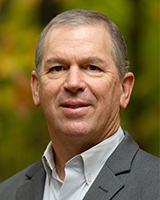
Interview with Governor David Beasley
Chair of the National Advisory Committee on Rural Health and Human Services
In this issue of the Rural Monitor, we have asked former South Carolina Gov. David Beasley to share some of his thoughts on rural health care. Beasley chairs the National Advisory Committee on Rural Health and Human Services. The Committee is a group of 21 rural health and human service experts from across America that comes together to advise the Secretary of Health and Human Services on issues facing rural communities. The Committee was originally chartered in 1987 at the same time that Congress created the Office of Rural Health Policy. Its members are appointed by the Secretary and serve four-year terms.
Gov. Beasley is in his fourth year as chair of the Committee. Under his guidance, the Committee has produced four annual reports on key rural issues such as the rural health care safety net, rural obstetrical care and welfare reform in rural communities. It is finishing work on its 2006 report to the Secretary, which will be published early next year.
Beasley served as governor of South Carolina from 1995 to 1999 and focused on economic development, family services and rural health during his tenure there. Since leaving the governor’s office, Beasley has been a Fellow at the John F. Kennedy School of Government at Harvard University and has worked on a variety of international development projects.
Q: How did you get involved with the National Advisory
Committee on Rural Health and Human Services?
A: I live in a rural area in South Carolina and rural issues are important to me. During my time as governor I focused heavily on these issues because South Carolina is a rural state. When then-Secretary Tommy Thompson approached me about taking over as chair of the Committee, I felt like it would be a great opportunity, and it has been. We have a great state Office of Rural Health in South Carolina and I really relied on the staff there such as Graham Adams for expertise and counsel when I was governor. Public policy issues have always interested me, and serving as chair of the Committee seemed like a great way to keep engaged on these issues. I also felt like this was a great opportunity to follow in the footsteps of the Committee’s previous chairs, former Iowa Gov. Bob Ray and former Kansas Sen. Nancy Kassebaum-Baker.
Q: What is the Committee’s role?
A: We’re there to advise the Secretary on rural issues and to help him and the rest of the Department understand the impact of regulatory and program issues on rural communities. The thing is, rural America is not all the same. It’s a big country. A rural area in South Carolina looks a lot different than a rural area in, say, Wyoming. It’s important that policymakers in Washington understand that and take it into account when they make policy. One of the great things about working with this Committee is that we have members from all over the country and from all different walks of life. It’s critical to get that broader perspective. One of the things I’ve learned is that rural issues are really bipartisan and you can see that if you spend any time with our Committee.
Q: What is the key lesson you’ve learned as chair of the Committee?
A: Over my time as chair, we’ve had the opportunity to talk with a lot of key policymakers, rural health experts and rural human service experts. We’ve visited rural communities in several states and have seen some great models of service delivery and also learned about heartbreaking challenges facing rural citizens. One of the neat things for me is that despite some serious challenges, I’ve been amazed at the creativity and ingenuity of folks in rural communities. The one common link with these folks, regardless of what part of the country they are from, is that they find flexible solutions to long-standing problems such as finding doctors to practice in rural communities, helping folks from small communities make the transition from welfare to work, and linking up seniors and the elderly with needed services such as adult day care or respite care. It doesn’t matter what side of the aisle you’re from on those issues. I’d like to think that through the reports we try to share those lessons learned with folks like (HHS) Secretary Leavitt. What matters is making sure that the policies are fair and flexible and work as well in Tupelo, Mississippi as they do in Boston or Chicago.
Q. How does the Committee do its work?
A: We produce an annual report to the Secretary that focuses on several key issues identified by the members of the Committee. We gather testimony in Washington during our annual winter meeting, often hearing from key folks within the Department and other Washington-based experts. From there, we do site visits in the spring and fall to learn more about how those issues play out in actual rural communities. The site visits are critical because it gives me and the Committee an opportunity to talk to real folks from rural areas and get the local perspective. We then take all that we learn and wrap it into a report that we usually send to the Secretary in February or March. The reports describe the issues and make recommendations to the Secretary. The folks in the Department then distribute that report throughout the many different agencies within HHS. The report is also made publicly available and becomes, I hope, a resource for a wide range of folks with an interest in rural health.
Q: What topics does the Committee address?
A: Well, this year the report focuses on the issues of access to pharmaceutical services, health information technology and family caregiver support for the elderly. Past reports have focused on such areas as obesity, public health infrastructure and Medicare, to name a few topics. We’re wrapping up work on the 2006 report and we’ll send it to Secretary Leavitt sometime in late winter. After it is reviewed by the Department, the report will also be posted to the Committee’s Web site (http://ruralcommittee.hrsa.gov).
Q: Who provides staff support to the Committee?
A: The Office of Rural Health Policy (ORHP) plays the primary staffing role but we also get staff support from the Administration on Aging and the Administration for Children and Families as well as the HHS Office of Intergovernmental Affairs. We also get a lot of help in researching topics from the Rural Health Research Centers, funded by ORHP, and from the staff at the Rural Assistance Center.
Q: How would you judge the success of the Committee?
A: I think the Committee members do a great job of picking topics that are current and relevant and I think the reports are well done. I think they raise important issues, primarily for the Secretary but I also think the rural communities benefit from the reports and that’s why they’re made publicly available. I also think the reports reflect the hard work and commitment of the members. You know I hesitated at first when I was asked to chair this Committee. I wanted to avoid partisan, Washington politics. But having served as chair I’ve come to see the value of my role here. This is just a really great group of folks who are truly committed to rural communities. I’ve really enjoyed working with all the members and learning from them. I also think we’ve been lucky to get out of Washington and visit real rural communities and hear from the front-line folks who are working hard every day with great challenges in ensuring access to needed health and human services in rural communities.
Rethinking Human Services
by Tom Corbett, Ph.D.
Getting Started
Toward Integrating Service Delivery
In this series, I have focused recently on the challenge of blending together programs and systems from different institutional cultures. In addition, I have stressed a fundamental error made by policy entrepreneurs who focus on specific strategies for achieving integration—an approach essentially confusing means with ends.
These are some of the challenges and mistakes. How, then, should we get started? Based on work I and my colleagues have done in several sites around the country, we conclude that the best place to start is with a specific target—a population and a set of goals tied to measurable outcomes such as healthy families, children ready for school or youth successfully transitioning to adulthood.
Such goals are the driving force behind any systems integration vision; all else is tactics and strategy. And focusing on a given target population grounds the planning process in an operational reality as opposed to abstract design and management principles such as efficiency.
For example, Utah, which has many rural offices, successfully integrated its TANF and workforce development systems starting in the late 1990s. More recently, the state moved to better integrate the TANF/workforce program with social service systems that had not been part of earlier integration efforts.
Rather than throwing these large service systems together by administrative fiat, state officials selected a specific target population—youth aging out of foster care—and focused on a limited set of outcomes that, they believed, would facilitate a better transition to independent living as self-sufficient adults. This seemingly modest reform agenda already is demonstrating broader possibilities for cooperation and collaboration across systems that previously were housed in separate state agencies.
Suggestions for Getting Started
Suggestion 1. In getting started, consider societal outcomes that exceed the purview of existing, more narrowly focused programs. Larger goals that tend to exceed the responsibility of any one existing agency—such as improving the proportion of children ready for school—create a different dynamic. Where feasible, envision achieving these broader goals for defined populations of concern to the community, e.g., teen mothers.
Suggestion 2. One place to begin the planning process is with the current caseloads of the programs that might be essential partners. How many families are being touched jointly by different programs and agencies? The realization that programs and caseloads sometimes overlap keeps questioning partners at the table and better grounds the subsequent planning process.
Suggestion 3. Early on, each individual program should go through some form of assessment. Can its core technology, the organizational tasks most closely associated with achieving the program’s purposes, best be described as fully routinized, partially routinized or nonroutinized (as described in my Summer 2005 article)? How is the core technology reflected in leadership style, the organization’s culture and its institutional systems?
Suggestion 4. Existing programs often define their clients narrowly, as a child or adult “case” with a specific problem. In shifting to an integrated systems framework, it helps to conceive of cases differently, perhaps as a whole family rather than a group of individuals with different problems who happen to be related.
Suggestion 5. In assessing how the creation of a new customer experience needs to be supported by reformed practices, protocols and policies, a “walk in their shoes” mental experiment can be extremely helpful. View things from the customer’s perspective. What has to change in existing practices and protocols at the interface with the customer? What changes in management practices are needed to support the practice changes? How does the physical layout have to be altered, or accounting and information technology systems updated?
Suggestion 6. In thinking through the implications of proposed changes, use focus groups, brainstorming sessions that include various stakeholders and any other techniques structured to obtain information and creative ideas from throughout the systems potentially impacted by the reforms. This can be a labor intensive and even painful experience, but more connections will be made and final buy-in is more likely.
In the late 1980s, officials in Kenosha County, Wisconsin, struggled as a pilot county for a new, work-oriented, welfare reform initiative that required the welfare and workforce development systems to work closely together. After a false start, the agency then undertook an intensive assessment of what they needed to do to really integrate the new work message into their welfare system. This assessment began with a simple set of questions. Who were their customers? What did their customers experience under current policies and procedures? What did they want to achieve with these customers? How would they have to transform the customer experience to achieve those outcomes? What kinds of changes in existing practice, administration and policies would it take to achieve this transformed experience?
The Kenosha planners always returned to the customer’s experience starting with, “What happens when an applicant walks in the front door?” Literally, the Kenosha planning team sat down at a blackboard with key staff and “walked through” the customer experience, assessing how each step in the process contributed or detracted from what they wanted to achieve. They involved staff and other stakeholders in the analysis, not all of whom were willing coconspirators in the beginning.
Keeping their focus on what they wanted to achieve and for whom, and always referencing the kind of customer experience they wanted to create, they slowly reengineered their entire way of doing business to make it outcome-focused, participatory and comprehensive. By 1990, Kenosha had opened up a one-stop Job Center that earned a national and international reputation, becoming the JOBS program of the year in 1992 and a model of reform for many sites around the country.
Tom Corbett has emeritus status at the University of Wisconsin-Madison and is an active affiliate with the Institute for Research on Poverty where he served as Associate Director. He has worked on welfare reform issues at all levels of government and continues to work with a number of states on issues of program and systems integration.
Look What's Coming
by Wayne Myers, M.D.
The Price of Privacy
When I was a working doc I had no special concerns or insights regarding medical privacy. I tried to go by the rules and the spirit thereof, remember the Hippocratic oath, and that was that. Of late I am less certain that the value we attach to the privacy of medical records is justified. I’m becoming convinced that excessive concern about medical privacy is killing people. I doubt that medical privacy is worth dying for.
I am talking only about concerns that the wrong people might get access to medical records. I am not talking about the constitutional right to privacy or any other more weighty aspects of the concept. Nor am I going into the procedures mandated by recent changes in federal law. I’m sticking to the big picture. Should we be so very concerned about medical snoops?
The outline of my argument is as follows. Timely and reliable access to a person’s medical records can determine the person’s health or even survival. That access is tenuous for most of us. Concerns about medical privacy impede the development of regional or national medical information systems. Such information systems could support error detection, inform reliable care regardless of time or place, and accelerate treatment research. The interests most likely to use personal medical information against an individual are his/her insurance company and the employer who pays for some health insurance. They already get the information.
The lack of personal medical information is dangerous, as business travelers, vacationers and people involved in this summer’s hurricane evacuations have discovered. The situation is a little better but still problematic for people hitting the emergency room, conscious or not, after clinic hours.
I’ve never seen estimates of the number of deaths attributable to lack of medical records. Two separate studies have estimated the number of deaths due to hospital errors at 44,000 and 94,000 per year. My guess, based on years in various kinds of practice, would put the number of deaths attributable to lack of records a bit lower, i.e. a few tens of thousands per year. The number of people wearing medical alert bracelets suggests widespread concern with this problem. Test results and reports are often lost or delayed. The amount of time and money spent repeating studies is astronomic.
Is there a rural slant to this? Rural people are more likely to leave their home communities for a variety of reasons than urban folk—work, shopping, tertiary care. Wouldn’t it be nice if a person’s health records were readily accessible regardless of time or place?
Health care quality experts point out that mistakes are inevitable. Reducing damage due to mistakes requires several changes in the way we do health care. One such change is the development of digital record keeping which supports error detection. They also point out the value of automated registries. What percentage of our diabetics is getting their feet examined, eyes checked, sugars well controlled? These sorts of registry functions require digital records of the sort compatible with automated access.
The Indian Health Service has had a nationally accessible patient record system for decades. The Department of Veterans Affairs system is attracting lots of favorable attention.
Progress is being made. The developing pattern is based on Regional Health Information Organizations, or RHIOs. There are about 400 such RHIOs in various stages of development. Federal involvement is being managed by the Office of the National Coordinator of Health Information Technology (ONCHIT). If you’d like to know more go to http://www.dhhs.gov/healthit/. As you might expect, it’s a pretty good web site.
Wayne Myers, a pediatrician, founded the University of Kentucky Center for Rural Health and served as its director. He also served as director of the Office of Rural Health Policy in the Department of Health and Human Services' Health Resources and Services Administration. He is a past president of the National Rural Health Association and currently serves on its Board of Trustees.
Around the Country
Washington
EMS Live @ Nite
It may not be the long-running Saturday Night Live, but EMS Live @ Nite is in its second season and going strong.
EMS Live @ Nite is an interactive video conferencing program that is broadcast in Washington state, northern Idaho, eastern Oregon, Montana, the Aleutian Islands and southeast Alaska.
“The purpose is to help educate volunteer emergency medical services personnel who don’t have easy access to training sites,” said Renée Anderson, program manager. “It’s unique because it’s a virtual classroom. Participants can ask questions of the presenter and interact with other students.”
Once a month, as many as 300 medical personnel gather across the Northwest in different locations to learn simultaneously about cleverly titled topics such as “Hypothermia and Cold Related Injuries, The Right Pill for the Big Chill”; “The Agitated Patient, How to Restrain Yourself”; and “Burn Care, It’s Not Too Hot to Handle.”
“We go through established networks,” Anderson said. “The classroom sites are at hospitals, community health centers, clinics or K-12 schools.”
She said the classes also offer the bonus of documented continuing education.
“We distributed over 1,000 Continuing Education Credits in the first nine months. All the participating states have accepted our interactive program to receive credits to meet state requirements,” Anderson said.
When EMS Live @ Nite began, there was concern about lack of interaction across electronic lines of communication.
“We were skeptical about how people would embrace this technology,” Anderson said, “but that is not a problem. Before one session early on, one group in Washington could not believe they were having class right alongside pupils from Adak, Alaska, which is closer to Russia than Anchorage. We couldn’t get them to quiet down.”
The fledgling program was one of two in the United States chosen to receive a three-year Rural Emergency Medical Services Training and Equipment Assistance Program (REMSTEP) grant in 2004 through the Office of Rural Health Policy. The project is sponsored by Valley Hospital and Medical Center, Northwest TeleHealth, Spokane County EMS, Deaconess Medical Center, Holy Family Hospital, Sacred Heart Medical Center and St. Luke’s Rehabilitation Institute.
For more information about EMS Live @ Nite, contact Renée Anderson, EMS Live/REMSTEP program director, Inland Northwest Health Services, 157 S. Howard, Suite 500, Spokane, WA 99201; call (888) 258-9632 or (509) 232-8155; fax (509) 232-8344; e-mail andersr@inhs.org; or visit http://www.inhs.org.
Special Series
Editor’s note: This is the first in a series of articles on rural health technical assistance resources around the country funded by the federal Office of Rural Health Policy (ORHP). The first article gives an overview of what is meant by technical assistance and follows with a feature on one of the technical assistance centers, the Rural Assistance Center.
Technical Assistance: More Than Fixing a Computer
Technical assistance sounds like calling someone to fix a computer, but in the world of rural health, it’s more.
Limited infrastructure, geographic isolation and a host of other factors can make it a challenge to provide needed health and human services in rural communities. As a result, ORHP has tried to identify needs and provide technical assistance in the areas of greatest need. That can range from providing information about grant opportunities to linking communities in need of a physician with a doctor looking to practice in a rural community.
In fact, when Congress created ORHP in 1987, it charged the office with establishing and maintaining a clearinghouse for collecting and disseminating information on a range of rural health care issues. This included rural mental health, rural infant mortality prevention and rural occupational safety and preventive health promotion, along with research findings relating to rural health care and innovative approaches to the delivery of health care in rural areas. Over the years, some technical assistance needs have lessened while new challenges have emerged and ORHP has strived to meet them.
“Technical assistance is a broad term designed to cover the vast variety of services needed by rural communities,” said Kristine Sande, project director at the Rural Assistance Center, one of the several technical assistance centers. “And the reality is that rural communities face a number of needs and those needs can vary greatly across the country.”
ORHP supports a number of projects that provide information, knowledge, resources and skill-development to help rural communities and providers maintain and improve access to quality of health care and human services. Types of services offered by these projects include information dissemination, one-on-one consulting, mentoring, planning, assessments and referrals. The projects vary from a comprehensive technical assistance center to organizations that may have a specific activity related to a technical assistance need.
“Each one is different,” Sande said. “Each one was developed based on need and funding availability.”
Some of these technical assistance resources provide services to the grantees of specific federal programs, or services or information only related to specific topics, while others serve a broader audience.
All of the technical assistance projects funded by ORHP are supported through either grants or contracts and have come online at different points in time based on need and available funding. ORHP also works with all of the technical assistance projects to coordinate their efforts, avoid duplication and ensure that the needs of rural citizens are being met.
“A joint technical assistance group is working toward building on the relative strengths of each project and collaborating efforts,” Sande said. She said this will meet the multidimensional needs of rural communities and ensure excellent customer service.
“All of the technical assistance projects are a success and will continue,” Sande said. “They are a valuable resource in this field.”
Rural Assistance
Center Serves a
General Audience
The Rural Assistance Center (RAC) is a unique resource to help rural communities access information on programs, funding and research beneficial to rural residents. Call their number and a friendly voice is ready to help.
“The Rural Assistance Center has a broad focus and is for anyone with a need for information related to rural health and human services,” said Kathy Spencer, information specialist.
RAC fields hundreds of requests for information and records 12,000 to 17,000 unique visits on their web site each month. A wide variety of stakeholders—including local health and human services providers, local and state government entities, community-based organizations, private foundations and researchers—use RAC’s resources in their efforts to maintain and improve the viability of health and human services delivery systems in rural areas.
The most common questions are from individuals or groups looking for grants. They want to know where they can apply for grants to get funding for creating or continuing programs or purchasing new equipment. In this case, RAC can do a customized search, looking at federal, state and foundation sources.
“We also get lots of rules and regulations questions, most often related to reimbursements. Oftentimes we’ll refer them to an expert in the field, such as another technical assistance center (specializing in that area),” Spencer said.
Even armed with years of experience and master’s degrees in library science, the information specialists are sometimes stumped.
“Sometimes, questions on statistics are hard to answer because the data simply does not exist,” Spencer said. “We can’t answer everything, but we’ll always give it our best shot or send people in an appropriate direction.”
Kristine Sande, project director for RAC, says that RAC capitalizes on information technology by making virtually all information Internet-accessible. Information available on RAC’s web site includes Information Guides on more than 60 rural topics; news and events from the rural community; possible funding sources for rural health and human service projects; and a searchable resource database.
“The RAC web site is very dynamic with new information being added every day,” Sande said. “We have also added several new sections to the web site in the last few months including Experts and Organizations, Reports and Publications, and Success Stories.”
Established as part of the U.S. Department of Health and Human Services’ Rural Initiative, RAC opened its doors in December 2002 and began serving as a rural health and human services “information portal.” Its goal is to help rural communities and other rural stakeholders access the full range of available programs, funding and research that can enable them to provide quality health and human services to rural residents.
RAC is housed in the Center for Rural Health (CRH) at the University of North Dakota School of Medicine and Health Sciences, Grand Forks. CRH acts as the lead partner on RAC, collaborating with the Rural Policy Research Institute (RUPRI).
For more information, call (800) 270-1898, e-mail info@raconline.org, or visit http://www.raconline.org.
Spotlight on Rural Research
by Hope Hanson
Health Care
Quality: Rural
Research Centers Produce Results
For those seeking to build their knowledge about health care quality, there’s a logical place to look—the federal Office of Rural Health Policy, and, in particular, one of its rural health research centers.
The Office of Rural Health Policy (ORHP) operates the Rural Health Research Center (RHRC) program. This is the only federal program solely dedicated to producing policy-relevant research on health care in rural areas. Initiated in 1988, it is intended to help policymakers across the nation better understand the problems that rural communities face in assuring their residents’ access to health care.
There are eight Rural Health Research Centers in the United States. Each one focuses on a certain aspect of rural health. The Upper Midwest Rural Health Research Center (UMRHRC) is a partnership of the University of Minnesota Rural Health Research Center and the University of North Dakota Center for Rural Health. The two centers combine expertise to undertake national projects focusing on quality of rural health care and other important rural health issues. UMRHRC study results are used by health care providers, purchasers of health care and policymakers, including the federal government.
Visitors to this center in Minneapolis are likely to meet senior research fellow Michelle Casey.
“Many of our projects focus on quality issues such as the development and field testing of rural-relevant quality measures, patient safety initiatives in rural hospitals and quality improvement initiatives in critical access hospitals,” Casey said.
The Center’s latest research involves looking at medication safety practices in rural hospitals. The study, titled “Successful Implementation of Medication Safety Initiatives in Rural Hospitals: The Role of Pharmacists and Technology,” is intended to assess the capacity of rural hospitals to implement medication safety practices.
“This project is on pharmacist staffing and the use of technology,” Casey said.
A national random sample of 387 small rural hospitals was surveyed for the report. And, the researchers found room for improvement.
“Expansion of pharmacist coverage in small rural hospitals would likely have a significant, positive impact on medication safety,” Casey said. “Given the shortage of pharmacists and difficulty recruiting them to rural hospitals, the study suggests that federal and state policy needs to support the use of alternative staffing options such as shared staffing across hospitals and greater utilization of telepharmacy arrangements that allow smaller rural hospitals to connect to the 24-hour pharmacist resources of larger hospitals.”
The study results also support continuing the use of information technology in rural hospitals through grant funding and technical assistance.
“We discovered significant relationships between financial status and pharmacist staffing,” Casey said. “Use of technology and implementation of medication safety practices supports a continuation of Medicare cost-based reimbursement to help ensure financial stability and patient safety activities in small rural hospitals.”
To learn more about this study or other published research by the Upper Midwest Rural Health Research Center, visit http://www.uppermidwestrhrc.org or contact Michelle Casey at (612) 626-6252.
Rural Health Research Centers Vital
Rural Health Research Centers have been instrumental in bridging gaps between policy and program needs. The centers have helped educate legislators and policymakers and have trained many health services researchers.
Each year, specific research topics for the centers are selected jointly by their directors and ORHP policy staff. The emphasis is on research that will have a timely impact on policy debates and decisions at federal and state levels.
Rural Health Research Centers publish their research findings in a large number of journals, book chapters and monographs. The Web site http://ruralhealth.hrsa.gov/pub/ lists a variety of the centers’ research publications.
The centers include:
- Maine Rural Health Research Center (Portland)
- National Opinion Research Center (NORC) Walsh Center for Rural Health Analysis (Bethesda, Maryland)
- North Carolina Rural Health Research and Policy Analysis Center (Chapel Hill)
- Rural Policy Research Institute (RUPRI) Center for Health Policy Analysis (Omaha, Nebraska)
- South Carolina Rural Health Research Center (Columbia)
- Upper Midwest Rural Health Research Center (Minneapolis, Minnesota)
- Western Interstate Commission for Higher Education (WICHE) Center for Rural Mental Health Research (Boulder, Colorado)
- Washington, Wyoming, Alaska, Montana and Idaho (WWAMI) Rural Health Research Center (Seattle)
Links to each center are listed at: http://ruralhealth.hrsa.gov/policy/RHRC/rhrccoop.htm.
Other Health Care Quality Research
While the Upper Midwest Rural Health Research Center is a prominent fixture in rural health care quality research, many other organizations find or compile current and relevant findings in health care quality.
- Washington, Wyoming, Alaska, Montana and Idaho (WWAMI) Rural Health Research Center (Seattle)
- The Commonwealth Fund publishes a monthly online update called “Quality Matters” at: http://www.cmwf.org/topics/ (scroll down to “Health Care Quality”). The Commonwealth Fund is a foundation based in New York with a rich 87-year history of supporting independent research on improved health care quality particularly for low-income people, the uninsured, minority Americans, children and elderly adults. The September 2005 issue of “Quality Matters” discusses the costs and other challenges in establishing a national health information network.
- The National Advisory Committee on Rural Health and Human Services focused it 2003 annual report on “Health Care Quality: The Rural Context.” It can be viewed at: http://ruralcommittee.hrsa.gov/nacpubs.htm.
- In a 2005 study, “Comparing Patient Safety in Rural Hospitals by Bed Count,” authors Stephenie L. Loux, Susan M.C. Payne and Astrid Knott determine how patient safety rates, offered services and patient mix vary by bed count among rural hospitals. The report, funded by the Agency for Healthcare Research and Quality, is available at: http://www.ahrq.gov/downloads/pub/advances/vol1/Loux.pdf.
- For those wanting to learn more about health care quality firsthand, The Institute for Healthcare Improvement (IHI) offers a variety of programs, Webinars, conferences and training on health care quality throughout the year. Visit http://www.ihi.org/ for more information. IHI is a nonprofit organization founded in 1991 and is based in Cambridge, Massachusetts.
- The Rural Assistance Center offers the “Health Care Quality Information Guide,” an exhaustive list of information, resources and links to useful documents and publications. Check it out at: http://www.raconline.org/info_guides/quality/.
- The Institute of Medicine (IOM) issued a report last year addressing quality challenges in rural communities. “Quality Through Collaboration: The Future of Rural Health” examines the quality of health care in rural America. The report can be viewed at: http://www.iom.edu/report.asp?id=23359. A nonprofit organization, the IOM was chartered in 1970 as a component of the National Academy of Sciences. The research of the IOM and the National Academies is conducted by committees of volunteer scientists— leading national and international experts—who serve without compensation.
The Rural Monitor
Staff
- Beth Blevins, Editor
- Hope Hanson, Writer
- Julie Arnold, Layout and Design
Call for Input
Something newsworthy going on in your part of rural America? Send a one-paragraph summary to the editor at: editor@raconline.org.
The Rural Monitor is published by the Rural
Assistance Center.
For additional copies, or to subscribe:
Phone: 800-270-1898
E-mail: info@raconline.org
Internet: http://www.raconline.org
© 2006. Rural Assistance Center. All Rights Reserved
Reprint Policy: Articles, photos, and charts appearing in the Rural Monitor may be reprinted with the permission of the Rural Assistance Center and proper citation. For permission, please contact ksande@raconline.org
|