• RAC’s State Resources pages, which present an overview of each state and its rural health and human services environment;
• RAC’s Resources for All States page for national data and state-by-state comparisons on health care and related issues.
In addition, research on rural health disparities by ORHP-funded Rural Health Research Centers can be found at the Rural Health Research Gateway Health Disparities page.
For more on wellness and obesity prevention programs, see:
Providers Overcome Disparities by Improving Health of Rural People
by Candi Helseth
Rolando Perez, a Physician Assistant at Community Health Development, Inc. in Uvalde, Tex., asks patient Rodrigo Mendoza to open wide.
Health care disparities in the rural population are not simply a matter of having less access to big hospitals and the latest technology like that available in urban areas. Many other factors also play into rural health care disparities—occupation, socioeconomic status, ethnicity, geographic isolation and even lifestyles. Rural Health Disparities and Access to Care reports that rural residents have higher rates of chronic diseases, more trauma-related deaths, and are more likely to smoke and not exercise regularly. They are also more likely to have lower incomes and be uninsured or underinsured. Among minority populations in rural areas, these disparities increase.
In many rural areas of the country, providers are working to decrease disparities by improving overall health. Among them are Holy Cross Hospital (HCH) in Taos, N.M., Community Health Development, Inc. (CHDI) in Uvalde, Texas, and Franklin Community Health Network in Farmington, Maine. These providers have found innovative and sometimes creative ways to offer medical and preventative care to their local populations. All three providers serve high numbers of low-income and uninsured or underinsured patients.
Fighting Diabetes in New Mexico
Chronic diseases like diabetes occur in higher percentages in rural areas. While diabetes occurs across all racial, ethnic and socio-economic groups, certain minority groups, including Hispanics and Native Americans, are at two to five times higher risk, according to Rural Healthy People 2010.
In the geographically isolated region split by the Rio Grande River and Sangre de Cristo mountain range in Taos County, New Mexico, a combined 65 percent of the county’s population (58 percent Hispanic and 7 percent Native American) is at higher risk for diabetes. Ten percent of the adult population already has diabetes diagnoses, compared to 6.5 percent statewide.
Susan Kargula, a certified diabetes educator and director of the Holy Cross Diabetes Self-Management Program, began raising diabetes awareness in 1992 by giving up her lunch hour to provide free diabetes education. From that beginning evolved today’s comprehensive diabetes prevention and management program recognized by the American Diabetes Association (ADA).
Holy Cross’s outpatient programming covers a wide range of areas, including nutritional needs, physical activity, medication usage, foot screenings, retinal eye exams, management of complications, prevention classes for youth, support groups and cooking classes.
Since implementing a prescription assistance program, patients’ blood sugar levels decreased an average of 1.5 percent over a six-month period. “That is a significant improvement in diabetes control,” Kargula said. “We had identified prescription assistance as one of the areas that needed to be addressed. Patients were not getting their meds because they were not able to afford them, or they were taking them incorrectly, or didn’t understand the purpose of the medications they were taking.”
Obtaining ADA recognition solidified Holy Cross’s program, Kargula said, by ensuring that it follows national standards and by allowing reimbursement from Medicare. Grant monies and sliding scale fees provide access for uninsured individuals.
“The diabetes program has been an expensive undertaking for the hospital, but they’ve fully supported its development,” Kargula said.
Seven years ago Holy Cross opened a freestanding Community Wellness Center that provides education, resources and support for the diagnosis or prevention of chronic disease. In addition to the diabetes program, its offerings include weight loss, stress management, smoking cessation and cancer support programs.
Helping the Uninsured Get Preventative Care in Rural Texas
Community Health Development, Inc., first funded as a migrant health center, is now a Federally Qualified Health Center serving four counties in southwest Texas that are federally designated as Medically Underserved Areas. Its mission is to ensure medical, dental and pharmaceutical care for patients without any form of medical or dental insurance. Payments are set up on a sliding fee scale according to the patient’s income and family size.
“We help people take charge of their own health,” CEO Rachel A. Gonzales-Hanson said. “We’re trying to change the culture. We actively plan, sponsor and participate in community health fairs and screenings, and we stress community education related to chronic diseases.” In addition, the agency offers workshops on food preparation and nutritional needs during its Diabetes Awareness Days, which also provide glaucoma screenings and foot checks done by a podiatrist.
“They found my glaucoma,” Anita Miller said. “I had no idea I had it.”
Miller, 60, is among the 57 percent of uninsured CHDI patients. “I definitely would not have survived if it weren’t for them (CHDI),” said Miller, who was employed by a small Uvalde County business with no employee health coverage benefits. She credits a CHDI physician for saving her life when she needed surgery for an abdominal aneurism. Miller said CHDI intervened when a hospital in San Antonio didn’t want to take her because she had no insurance.
“They’ve helped me in so many ways over the last 20 years,” she said. “I couldn’t afford my medications if it weren’t for their prescription (assistance) program. They even helped me improve my eating because I have high cholesterol.”
CHDI is the only dental provider in the entire service area. “When we opened the dental department five years ago, it was inundated by adult patients who had never been to a dentist or hadn’t seen a dentist in many years,” Gonzales-Hanson said.
In addition, CHDI offers pap smears, mammography and a family planning program that is, according to Gonzales-Hanson, trying to change the idea that family planning is always a woman’s responsibility, by office staff talking to both partners during visits.
Promoting Cardiac Health in Maine
The Franklin Community Health Network serves rural and frontier populations in Franklin County, which has the lowest adult smoking rate and one of the lowest death rates from cardiovascular disease in Maine. “That defies the odds because we are very rural and are in one of the poorest counties in the state,” said Leah Binder, executive director of the Healthy Community Coalition (HCC), an affiliate of the network. “But we have a long, strong history of building community health.”
Since 1974 Franklin County physicians have offered blood pressure screenings to the public. Other health screenings were added through the years.
In the present day, HCC continually assesses “ways to make it easier for people to choose to be healthy,” Binder said. For instance, Cardiac Rehab patients traveling 100 miles three times a week said fixed incomes and rising gas prices were financially draining their ability to continue the outpatient heart rehabilitation program. So the Franklin network developed an at-home program for patients that reduced their travel from three times a week to once a week.
Franklin Memorial Hospital offers a broad spectrum of preventive, diagnostic, acute-care and rehabilitative services through its Western Maine Center for Heart Health. The hospital was the first in the state to declare itself smoke-free and among the first in the state to offer heart-healthy dining in its Healthy Heart Cafe.
Taking services to every corner of their service area greatly improves patient participation, Binder said. HCC’s mobile health unit, easily identifiable because of its bright scenes painted by local artists, travels throughout Franklin County providing education, screenings and counseling.
Providing Food and Fun
Promoting good nutrition and exercise is a priority for these providers.
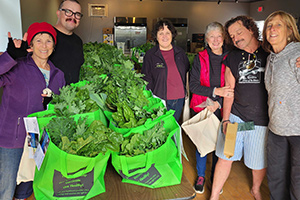
HCC volunteers tend a garden on the Franklin hospital campus, from which they donate produce to local food pantries. “Many people can’t afford fresh foods so this program has been really popular,” Binder said. “We also try to help users with preparation ideas and ways to eat healthy but still inexpensively.”
In collaboration with area restaurants, CHDI incorporates healthy meal choices into restaurant menus. Salsa Night, a fun family evening that has been held, so far, in four local housing projects, features nutritional food samples, recipe sharing, fitness education and salsa dancing.
“The kids love it and they’re out there egging their parents to dance,” Gonzales-Hanson said. “It’s been good for families, and has improved relationships among tenants too.”
CHDI’s Walk Texas, a “friendly” team competition, incorporates fitness education and motivation. Winter walking maps on HCC’s web site list available indoor exercise options such as school gymnasiums open to the public.
Involving Communities Is Key to Success
To effectively serve rural areas, providers must work with local organizations to strengthen community relationships, Binder said.
HCC was originally incorporated in 1992 as a community partnership. One of 30 sites designed as a Healthy Maine Partnership with support from the Fund for a Healthy Maine, it grew out of an innovative screening program begun in the 1970s by Franklin area physicians. (See ScoreHealth textbox).
The coalition works to promote healthy behaviors and build strong, bonded communities as a way of improving longevity and other health factors. This has meant anything from leading a coalition to help address smoking among pregnant women and parents, to building a local playground. HCC also administers Community Health Visioning, a biennial series of meetings held in every part of the region to find out what people think are the priorities for health in their community.
Another example of a provider-community partnership is the pregnancy prevention curriculum that CHDI helped its community partners introduce into the local school system, following concern about the high rate of teen pregnancies there. The program also works with girls who are pregnant with their first child so they don’t get pregnant again right away.
“Improving community health requires more than just money,” Binder said. “It requires all of our assets—individuals, organizations, churches, volunteers—harnessing all that energy and all those resources.”
ScoreHealth: Decades-old Program Brings Preventative Services to Rural Maine and Elsewhere
Franklin County may be one of Maine’s poorest, most rural counties, but health care providers there began stressing prevention and wellness long before public health screenings were as commonplace as they are today. In 1974, a group of progressive Franklin County physicians initiated blood pressure screenings for the public.
Charged with improving cardiovascular health, internist Dr. Burgess Record thought cardiac problems would be more preventable if high blood pressure was better controlled. About 130 nurses began traveling to clinics in frontier and rural areas to screen and assess people at risk. Individuals with elevated blood pressures were referred to a physician.
“At that time, there were no public screenings being offered, no systems in place to assure that physicians would accept these assessments, and no national guidelines for doing assessments like there are now,” Record said. So he developed ScoreHealth, a program to assist the nurses with professional risk assessments, guidelines-based counseling and tracking of risk factors.
The physicians continued their prevention focus, adding cholesterol screenings and educational programs on topics such as diet, depression and the importance of regular physical activity. They moved screenings into public places like grocery stores. Counseling, referrals and ongoing care management became part of their program. In the 1990s, Record renovated ScoreHealth into a software program and nurses discarded their boxes of patient data cards, replacing them with laptops to track patient health.
Today, the Healthy Community Coalition, a community-based organization that grew out of that initial physician effort, still uses the program originally developed for rural residents in Franklin County. ScoreHealth is also used in additional areas of Maine as well as three other states. The July 2000 issue of the American Journal of Preventive Medicine reported ScoreHealth’s positive outcomes, including lower death rates, in rural Franklin County.
Innovative Programs Offer Health Care Coverage to the Rural Uninsured
by Candi Helseth
Dan Truttman of New Glaurus, Wis., drives easier these days since obtaining insurance coverage through the Farmers’ Health Cooperative of Wisconsin.
Disparities in health care insurance coverage contribute to increased financial vulnerability for people living in rural areas. Rural people are more likely to be insured through the non-group market and consequently pay higher premiums on policies with higher deductibles. They are also more likely to have fewer benefits and spend higher percentages of their income on health care than those with employer-sponsored coverage, according to Dr. Alana Knudson, the associate director for research at the Center for Rural Health at the University of North Dakota, School of Medicine and Health Sciences.
Knudson recently co-authored the 2007 Health Insurance Survey of Farm and Ranch Operators, which looked at health coverage issues for farm families in seven Great Plains states. Data from the survey, which was conducted by the Center for Rural Health in collaboration with Brandeis University and The Access Project, will be shared with state and federal policymakers to help inform them on how to improve farmers’ access to insurance.
Even though farmers and ranchers in the survey earned higher-than-average incomes and carried insurance coverage, one of every four said health insurance premiums and out-of-pocket-related expenses were burdensome.
“Farm families purchasing insurance in the individual market spent $4,359 more than those able to secure coverage through off-farm employment,” Knudson said. “Many families are being forced to take jobs off the farm for affordable insurance. The profitability of their businesses is hurt, and that has an impact on the overall economy.”
Knudson noted that the research has application beyond farm operations, providing insight into how self-employed people in general face higher costs purchasing health insurance in the current market.
Two examples of programs attempting to meet the special needs of self-employed people include the Farmers’ Health Cooperative of Wisconsin (FHCW) and Franklin Community Health Network’s Contract for Care and its other assistance programs in Franklin County, Maine. FHCW is the first farmers’ health insurance cooperative in the United States and Contract for Care Director Jan Hannaford says she knows of no other programs similar to theirs.
Farmers Design Coverage That Works for Them
Farmers’ Health Cooperative of Wisconsin, which began enrolling members in April 2007, has about 2,000 members from 61 of Wisconsin’s 72 counties. As both owners and members, farmers and agribusinesses helped design the cooperative’s coverage. A voluntary board of member-directors oversees the operation.
Agriculture operators and agencies began working with state legislators and the governor to spearhead a law that authorized creation of a farmers’ health cooperative after research indicated Wisconsin farmers blamed lack of affordable quality health care for forcing them off their farms to seek employment. A University of Wisconsin (Madison) study confirmed farmers were paying three times as much in health insurance as salaried employees.
Farmers also found it difficult to even find adequate coverage they could purchase, cooperative president Bill Oemichen said. Fewer than 20 percent of Wisconsin farmers had 24-hour coverage, as FHCW does. FHCW also has an accident benefit clause that assists with additional expenses for farm-related injuries.
“Fifty percent of our members have told us our plan is less expensive than what they previously bought and with substantially better benefits,” Oemichen said. “Twenty-five percent say it’s the same cost with better benefits. The remaining 25 percent say the cost is slightly higher but the benefits are substantially better.”
In the cooperative spirit, FHCW shares its knowledge and resources with other interested groups, Oemichen said. Among them are the Wisconsin Medical Society, which is creating a health cooperative for independently employed physicians, and Healthy Lifestyles, a cooperative that will cover employees working in 120 small Green Bay, Wis., businesses.
Maine Network Lets Patients Work Off Bills
In Maine’s western mountains, Franklin Community Health Network has developed programs to help its uninsured and underinsured patients with their financial responsibilities.
“We have a community with a large cross section of talented, educated people that are self-employed, like writers and artists, or people working in small businesses without insurance benefits. They often have high deductibles or out-of-pocket expenses,” Hannaford said.
Contract for Care allows patients to voluntarily work off their bills. They become part of the general volunteer pool, Hannaford said, and are not identified separately in any way. These patients can choose to perform tasks on an hourly basis or use their skills independently to benefit the hospital. For instance, a self-employed auto body shop owner with a large out-of-pocket deductible refinished and repainted the hospital’s fleet of vehicles to pay off his portion of his bill.
“He even put the Franklin logo on all our vehicles,” Hannaford said. “I think one of the best benefits is that many of our Contract for Care participants feel so positive about their contribution to the community that they continue to volunteer even after their bill is paid.”
The Franklin network also offers other services to help patients. Local physicians and providers donate services at a reduced rate and a portion of prescription drug costs are reimbursed for patients who qualify for their Franklin Health Access program. Their HealthCard program provides bill reduction options for patients of all income levels.
Wider Coverage Still Needed
While these types of programs are certainly commendable, they provide answers for small groups of people in what is actually a nationwide problem. Experts on rural health care say insurance reform needs to happen on a larger scale.
“Our population is aging and we have more chronic conditions than ever before that contribute to higher priced health insurance premiums,” Knudson said. “Affordable and accessible health insurance is becoming a greater and greater challenge, especially for people in rural America.”
Meanwhile, employee health care expenses are likely to keep increasing. The annual National Survey of Employer-Sponsored Health Plans conducted by Mercer, a global consulting firm, has found that the number of small businesses offering health insurance continues to decrease and employers offering health insurance are shifting more insurance-related costs to employees.
“Efforts to expand employer-based health coverage, especially among small employers, have proven difficult because of the cost barriers these employers face,” said Andy Coburn, who is currently directing the Maine Rural Health Research Center’s study on Expanding Rural Health Insurance Coverage.
“These barriers are even greater among rural employers because of their smaller size, lower wage rates and more limited financial circumstances. Most research has shown that insurance subsidies targeted to employers and workers need to be quite substantial to encourage and enable uninsured employers and employees to participate. Given the more challenging financial circumstances of rural employers and employees, such subsidies would need to be even greater if they are to be effective in rural areas.”
Coburn says strategies such as individual tax credits that seek to make individual options and coverage more affordable face two key challenges when applied to rural populations. “The lower incomes of rural adults and children mean that subsidies will need to be generous if these options are to be truly affordable,” he said. “And the administrative costs of marketing and enrolling rural people in such plans will be higher.”
Until any significant reforms take place, rural families are more likely to be denied coverage or face even higher premiums if pre-existing conditions exist. Tim Peterson, a farmer from Rembrandt, Iowa, purchases coverage on the individual market. He and his wife have separate policies due to pre-existing health conditions that make her virtually ineligible for comprehensive coverage. In one year, the Petersons spent more than $6,000 in insurance premiums and another $10,000 in out-of-pocket expenses.
“The presidential candidates talk about the health care crisis, but it’s really a health cost crisis,” Peterson said.
For more innovative programs regarding health coverage in rural areas or to share information about your own programs for self-employed, low-income and uninsured patients, see the Health Insurance and Uninsured Success Stories on the RAC web site.
MIHOW: Outreach Program Offers Kitchen Table Advice to New Moms
by Candi Helseth
MIHOW outreach worker Linda McGlone (holding baby) visits with a mom and baby at their home in Frakes, Ky. (McGlone is now a MIHOW regional consultant).
For the last 25 years, the Maternal Infant Health Outreach Worker (MIHOW) program has proven that the best advice for pregnant women and new mothers often comes from other moms themselves.
Begun in 1982 to improve birth outcomes, MIHOW brings laywomen from the local community into the homes of women who are economically disadvantaged and/or geographically isolated. Over the kitchen table, these women establish bonds and talk about having healthy babies and building healthy families. MIHOW research conducted by Vanderbilt University demonstrates that low birth weights have improved and these families also benefit in other ways.
Originally a pilot project in Appalachia for rural low-income Caucasian and African-American families, today’s MIHOW serves a wide range of ethnic populations in Kentucky, Louisiana, Mississippi, Tennessee and West Virginia. Women receiving its services are pregnant with their first child or have young children up to three years old in the home.
MIHOW’s strength lies in its outreach workers. Selected for their ability to be role models and trained by MIHOW, the women make home visits to promote healthy living and self-sufficiency, and to educate parents about nutrition, health and child development. They also are trained to link families with medical and social services if needed. MIHOW workers have visited more than 12,000 families living in the five states.
“Being a good listener is one of the most important things I think we do,” said Kathy Bracken, a MIHOW outreach worker for 16 years in Fayette County, W. Va. “We have a curriculum to follow, but it’s important to find out what that family really needs and to be flexible. I might be there to talk about cooking healthy, and that mom might not have food to feed her family. I’ve encountered many family problems over the years that required me to redirect what I had planned to respond to an immediate need.”
“A local organization administers the program and ensures that people receive culturally competent services,” MIHOW Director Tonya Elkins said. “All the sites meet standards, but the way they meet them varies.”
The county where Bracken lives has one of the highest teen pregnancy rates in the state. Bracken’s outreach has expanded beyond homes into the schools where she has counseled many expectant teens, and often their boyfriends, during the school lunch hour.
“One year we had 12 pregnant seniors,” she said. “These young people all remained in school and took responsibility for the pregnancies in a positive way. It was so rewarding to see all of them graduate.”
MIHOW’s basic foundation for its services is the recognition that, regardless of living conditions or circumstances, every family has strengths, Elkins said.
“We don’t go into the home to try to tell a mom what to do or what to change in the family,” Bracken said. “We look at the family’s strengths, identify them and help them build on them. Even in the most horrific conditions, you can find strengths in a family. It opens a new perspective for them and they see they can accomplish more.”
Vanderbilt has developed extensive training materials and coordinates initial training, continuing education classes, conferences and other education for outreach workers and community partners. Regional leaders act as liaisons between Vanderbilt and the sites.
MIHOW is supported primarily by grants from institutions and foundations, including the Annie E. Casey Foundation, the Ford Foundation, the Robert Wood Johnson Foundation and Vanderbilt University. It also receives private donations and sponsors fundraising activities such as a house concert series.
Research proves the program works, Elkins said. Birth weights have improved and MIHOW mothers consume more vitamins and iron, use less tobacco and caffeine during pregnancy, and are more likely to breastfeed than comparison groups of women with similar circumstances.
A 2004 study compared MIHOW Mississippi mothers to similar mothers and found that 90 percent of MIHOW moms began prenatal care in the first trimester, compared to 75 percent of pregnant women in Mississippi. Of MIHOW moms, 81 percent received adequate prenatal care compared to 69 percent of Mississippi women; 7.7 percent gave birth to a low-birth-weight infant compared to 14 percent statewide; 95 percent eligible for WIC enrolled compared to 75 percent statewide; and 98.5 percent secured some form of health insurance compared to the national rate of 81.6 percent.
“Seeing families I work with turn their circumstances around, find their strengths and make the most of them is the ultimate reward in home visiting,” Bracken said. “It’s a heartwarming experience.”
For more information, contact Tonya Elkins, MIHOW director, by mail: The MIHOW Program, Center for Health Services, Vanderbilt University, Station 17, Nashville, TN 37232-8180; by phone: 615-322-4184; by fax: 615-343-0325; or by email: tonya.j.elkins@Vanderbilt.Edu. The program’s web site is: http://www.mihow.org/.
ProACTIVE Wellness Initiative: Helping Wisconsin Workers Get Fit
by Candi Helseth
Emilio Juarez, shown here at work at D&S Manufacturing, says that the pAWI program has helped him get fit..
Employees at D&S Manufacturing in Black River Falls, Wis., are healthier these days, since participating in a worksite wellness initiative.
Of the 53 D&S employees who voluntarily participated in the proACTIVE Wellness Initiative (pAWI) in 2006, six quit smoking, 20 decreased their blood sugar levels and 15 lost an average of eight pounds each during the nine-week program. Overall, the group recorded a 5.1 percent decrease in both cholesterol and blood pressure levels.
Coordinated by Black River Memorial Hospital and funded by the Wisconsin Partnership Fund For a Healthy Future through the Wisconsin Office of Rural Health (WORH), pAWI was developed in 2006. Liz Lund, business development manager at Black River Memorial Hospital, said surveys on community wellness behaviors and needs in 2005 had revealed that two of the top five needs related to worksite wellness.
“Wisconsin is 22nd in the nation for adult obesity, and of the working population surveyed in Jackson County, time, energy and lack of childcare were most often cited as deterrents to maintaining good wellness habits,” Lund said. “Twenty percent noted no current physical activity with 52 percent not achieving the recommended level of exercise. There was a clear need for programming to accommodate the working population.”
D&S, Black River Falls School District and Hart Tie & Lumber were the first sites selected to participate. All three businesses are located in Black River Falls, which has about 3,600 residents. pAWI began by conducting employee health risk assessments at each site. Follow-up programming was held at D&S and the school. Hart Lumber served as a control in the study, so no interventions were implemented there.
Employees at D&S, which manufactures large-scale components, assemblies and other metal parts, showed measurable outcomes. In addition, the employees reported positive changes such as adopting regular exercise habits, eating healthier and getting established with a health care provider.
“I eat three healthy meals a day now and I eat better foods I didn’t eat before,” said Emilio Juarez, a D&S employee whose cholesterol levels returned to the normal range. “I push myself at my job to work harder physically. I kind of make my job a game for me, to help me get more exercise and stay more fit.”
“We saw successes even in the assessment phase,” Lund said. “A lot of the men at D&S never went to a doctor. Many male participants had never seen a provider for preventive services. When results showed any areas of high risk, we attempted to get those individuals connected with a physician.”
A participant whose screening revealed high blood sugar was referred to a physician, diagnosed with diabetes and placed on medication. By the time he completed the wellness program, he had changed his diet and exercise sufficiently enough that he was able to stop the medication.
Worksite programming covered a wide range of areas, including nutrition, weight loss, cooking, exercise, fitness training, tobacco use, stress management, depression and local wellness resources. Participants competed as teams. Coaching, weigh-ins and blood pressure checks monitored individual progress. Incentives and prizes encouraged participants to stay motivated and practice good habits at home too.
“Even mentally, the program helped me improve,” Juarez said. “Fifteen years ago I had a brain aneurysm and it left my memory damaged. In the program, I learned some things to help me stay more alert.”
Wisconsin Partnership funding covered participation costs for 25 participants at each work site. D&S paid employees during work hours, and also paid registration costs for the additional 28 employees.
“We saw it as a sound investment,” said D&S President Mike Dougherty. “We may not be able to quantify our investment for years down the road, but if we’re going to do something about controlling health costs, one of the best things we can do is encourage wellness among employees. Health care costs have gone from being a minor benefit cost to our third largest expense behind labor and materials.”
Employees at all three worksites experienced improvements, but improvements were higher overall in the two businesses where follow-up programs and coaching were implemented, Lund said.
A secondary benefit included the number of spouses and family members who made behavioral changes. Dougherty said D&S employees who hadn’t been physically active were out walking with their spouses at night. The wife of a smoker quit when he did. Most importantly, Dougherty noted, the initiative fostered long-term commitment. A D&S employee committee continues programs and incentives to maintain motivation for healthy lifestyle changes.
Healthier employees reduce the burden of health care costs and insurance premiums, Lund said. Through the program, area businesses are becoming more cognizant of healthy workforce benefits, such as increased productivity, reduced turnover and fewer lost workdays due to chronic illness and fatigue.
pAWI, which includes several community partners in addition to WORH, is bringing worksite wellness programs to additional area businesses in Jackson County. The program is being funded through February 2009.
For more information, contact Liz Lund, Business Development Manager, Black River Memorial Hospital, by phone 715-284-1386 or email lundl@brmh.net.
As I sat down to write this article, my first thought was the recent announcement of the 2008 federal Poverty Guidelines that were announced on January 23, 2008. The new figures range from $10,000 for an individual living in the 48 contiguous states to $35,000 for a family of eight. For a median-size family of four the figure is $21,200, up about 2.5 percent over last year.
The guidelines are not to be confused with poverty thresholds that are published annually by the Bureau of the Census and are basically used for statistical purposes. Rather, the guidelines have real meaning for many low-income Americans.
As simplified versions of the thresholds, they are issued annually by the U.S. Department of Health and Human Services and used to establish income eligibility for a number of anti-poverty programs. Some 32 federal programs operated by seven different federal departments use the guidelines (or multiples of the guidelines, such as 125 percent) to determine who is eligible for benefits and who is not. As such, the guidelines affect the well-being of millions of families.
As a policy-oriented academic, these numbers and others like them have been my life’s blood. Still, there is something bloodless, no pun intended, about guidelines and thresholds. While they provide us with descriptive data about poverty, and ways of identifying who will be helped, they do little in helping us really understand economic want.
So, I thought I would look in a different direction. The Institute for Research on Poverty (IRP) at the University of Wisconsin compiles and distributes what they call Poverty Dispatches, a collection of links to Web-based news articles that have appeared over the past few days.
This highly selective perusal of articles from popular media outlets presents a sobering picture of want in an affluent society. It offers an impressionistic insight into rural destitution not necessarily available in quantitative data. So what are some of my immediate impressions?
Rural poverty is less visible. “But unlike poverty in cities,” reporter Calvin Trice notes about rural Virginia poverty, “…it tends to be isolated, scattered, and to some people, difficult to grasp.” He goes on to say that “In rural areas, aid workers and volunteers don’t have housing projects or blighted neighborhoods as beacons for needs. Social workers…find a person living in a barn here, someone living out of a car in another part of the county, and a disabled person who can’t get out of her trailer tucked away in a wooded area elsewhere.” (A hidden need for aid: Poverty in central Va.’s rural areas, Richmond Times Dispatch, Dec. 9, 2007).
Rural poverty is less institutionalized. On rural Minnesota’s tribal lands, homeless shelter director Carol Priest comments on how social networks catch those in need. “It is not unusual to find one nuclear family per bedroom in a home. So you could have a three-bedroom house with a parent or two parents plus their kids in each bedroom. So you could have 12 to 15 people in a three bedroom house.” (Reservation homelessness survey first in the nation, Minnesota Public Radio, broadcast December 10, 2007).
Rural poverty is not immune from larger societal forces. The Minneapolis Star Tribune reports that rural Minnesota is not immune from the sub-prime credit crisis. Six of seven counties with the highest foreclosure rates are essentially rural counties. One rural woman in the story faces mortgage payments that have doubled. “Though she quit driving, canceled her cable and Internet service and line dries her clothes, she said she still cannot make ends meet.” (Mortgage foreclosures ripple into rural Minnesota, Minneapolis-St. Paul Star Tribune, December 11, 2007).
Rural poverty traps those trying their very best. In rural western Wisconsin, the Dunn County News describes the tenuous nature of want in the following way. “Most of the people who end up in shelters have been working or are still working. It’s just that the (wages for) the jobs don’t cover their basic needs. It’s a huge issue.” Robyn Thibado of the West Central Wisconsin Community Action Agency describes how a “work-related injury without adequate health insurance to cover the medical expenses can change circumstances so abruptly that in a paycheck or two, someone is homeless.” (Homelessness in Dunn County, Dunn County News, December 24, 2007).
And it grabs our most vulnerable citizens. The Columbus Dispatch describes how the poverty rate among rural Ohio children has jumped seven percentage points since 2000, more than in any other state. The struggle to escape can be poignant. The paper describes the efforts of a high school junior with a near 4.0 grade point average looking forward to escaping poverty through education. But even the cost of books looks prohibitive. “There was that stretch of time that we were barely there. The gas was off. I wasn’t sure I was going to have books in time. Some we needed to read before the class started.” But she perseveres, at least for the time being. (Rural poor a growing problem, Columbus Dispatch, October 22, 2007).
Numbers tell us a lot, but sometimes we need to look just a little closer.
Tom Corbett has emeritus status at the University of Wisconsin-Madison and is an active affiliate with the Institute for Research on Poverty where he served as Associate Director. He has worked on welfare reform issues at all levels of government and continues to work with a number of states on issues of program and systems integration.
Opinions expressed in this column are those of the author and do not necessarily reflect the views of the Rural Assistance Center.
Professor Corbett welcomes your feedback. Comments and reactions can be sent to: Corbett@ssc.wisc.edu.
If the task is to change a light bulb the answer is “one.” If the service to be provided is more complex, we have no idea of the answer. That seems a bit strange. I saw my first medical workforce study about 1972. (Actually, the term at the time was “medical manpower.”) The problem, though, is that all the projections of physician workforce need that I am aware of are based on what the market is paying for, with extrapolations to what the market will pay for in the future.
Some studies gain more respectability by having their recommendations for physician-to-population ratios developed by panels of experts. This refinement is more apparent than real. The experience of these experts is based on how busy their medical specialty colleagues are in various communities, also known as markets.
But Dr. Jack Wennberg and his colleagues of Dartmouth Atlas Project fame have shown that the amount of specialist work done varies enormously from community to community. The most powerful determinant of the workload of a given medical specialty in a community seems to be the number of doctors in that specialty: the more gynecologists, the more hysterectomies. To paraphrase the old saying, if you’re a hammer everyone looks like as nail. Sad-to-say, those variations in amounts of medical work being done, patients being hospitalized, operations being performed, have no apparent relationship to the needs of the population or the quality of the medical outcomes.
Dr. Barbara Starfield and her group at Johns Hopkins University’s Bloomberg School of Public Health shine a light on the physician workforce in a different and very important way. She looks at an unequivocal outcome: life versus death. For every county in the United States she asked, “Is there a relationship between the number of doctors and the death rate?” More precisely, “What is the relationship between mortality in a county and the ratio of physicians to population in a county?”
The results are fascinating. As the number of primary care physicians per capita increases, mortality decreases. This effect is particularly strong for family physicians. The more family docs per capita, the lower the mortality….a pleasing outcome if you think doctors help.
But not so for referral specialists. The raw results are startling. As the ratio of specialists to population increases so does mortality. That’s not very reassuring, considering that two-thirds of our docs are referral specialists. It’s possible to analyze away these results to some extent. Referral specialists are most numerous in large cities, the same cities where there are relatively large proportions of poor and minority people who generally have poorer health statistics than the population as a whole. Sophisticated statistics reduce the relationship but cannot make it convert from “bad” to “good.” At best, the relationship between the abundance of specialists and population health is random. Primary care docs help local health. An abundance of referral specialists is not helpful. I believe, but don’t know, that some dangerous situations are better handled by a specialist than a generalist. I, and Dr. Starfield, realize that different docs treat different diseases while her analysis lumps all referral docs and all deaths. Some additional slicing and dicing of the data is in order, but I remain impressed.
I am also convinced that specialists can be dangerous. When two or more specialists get involved in the care of one patient they are unlikely to coordinate with their “team members.” I find appalling the admonitions in the TV drug ads, “Be sure and tell your doctor if you have kidney failure, heart failure, suppression of your immune system…..” Only in dangerously subspecialized and fragmented care would the prescribing doc NOT know her/his patient’s medical situation.
One interpretation is as follows: We need some referral specialists. When they come on the scene they save some lives. As more specialists are added to the mix they fragment care and begin doing things that don’t improve patient survival. The graph of the number of specialists versus survival turns flat or starts going downhill. Starfield’s findings suggest that we are over the hump and headed downward on that curve, with an excess of referral specialists all over the country. More simply put, adding more referral specialists won’t help and may kill people. There are other interpretations but none, it seems to me, suggesting a shortage of specialists.
So what’s the point? Is the need for increasing numbers of specialists driven by hospitals’ and clinics’ finances rather than public need for specialty care? We have gotten accustomed to an excess of specialists. We need a body of research comparing the availability and regional abundance of particular specialties to the outcomes of the diseases they treat.
Less than one-quarter of newly trained docs is opting for careers in primary care. In this era of accountability for outcomes I wouldn’t spend any more money expanding medical education until we know more about what kind of docs we need and how to match physician supply with public need. It is said that you get what you pay for. We’re paying for the wrong things, perhaps with lives.
Wayne Myers, a pediatrician, founded the University of Kentucky Center for Rural Health and served as its director. He also served as director of the Office of Rural Health Policy in the Department of Health and Human Services’ Health Resources and Services Administration. He is a past president of the National Rural Health Association.
Opinions expressed in this column are those of the author and do not necessarily reflect the views of the Rural Assistance Center.
Dr. Myers welcomes your feedback. Comments and questions can be sent to him at myers@raconline.org.
Dr. Mary Wakefield is associate dean for rural health at the School of Medicine and Health Sciences, University of North Dakota, and director of the Center for Rural Health at the School of Medicine and Health Sciences, University of North Dakota, in Grand Forks, N.D. She has served as Center Director since November 2001.
Wakefield has expertise in rural health care, quality and patient safety, Medicare payment policy, workforce issues and the public policy process. She has presented nationally and internationally on public policy and strategies to influence the policymaking and political process, and has authored many articles and columns on health policy. She was on the editorial board of a number of professional journals, including The Journal of Rural Health, and is on the boards of Nursing Economic$, and Annals of Family Medicine.
Wakefield is a nurse and was a professor of nursing before serving as a legislative assistant and Chief of Staff to Senator Quentin Burdick (D-ND) from 1987 until 1992. From January 1993 - January 1996, Wakefield was the chief of staff for United States Senator Kent Conrad (D-ND). Throughout her tenure on Capitol Hill, Wakefield advised on a range of public health policy issues, drafted legislative proposals, and worked with interest groups and other Senate offices.
From January 1996 - December 2001, Dr. Wakefield served as professor and director of the Center for Health Policy, Research, and Ethics at George Mason University, Fairfax, Va.
Wakefield is married to Charles Christianson, a family practice physician. They live in Grand Forks. Although she lists work as her only real hobby, she also enjoys taking walks and going fishing and ice fishing for relaxation.
For more on Wakefield, see her UND Faculty page, which gives a more extensive biography and includes a list of her projects, presentations and publications.
How did you make the transition from nursing to health policy? I practiced nursing full or part time from 1976-1985 and taught nursing from 1977-1987 in one form or another. I worked primarily as an intensive care unit nurse and taught nursing at the University of North Dakota. Then I decided in 1987 to try to get a summer experience working on Capitol Hill. Instead of an internship, a North Dakota Senator offered me a job as his health legislative assistant. I’d only been to D.C. once before, for less than 24 hours, so I was completely wet behind the ears. I knew health care and education, but I knew little about the public policymaking process. While a lot of hill staff know the process and have to learn the issues, I knew a lot about the issues but not the policymaking process. Either way, it’s a steep learning curve. I really wanted to continue to practice nursing while I was on the hill but the schedule was just too unpredictable, particularly after I took a chief of staff position a year and a half after arriving in D.C.
It was a major redirection in career. I’d aspired to being a nursing dean at some point but that plan melted away once I was in Washington. What took me to D.C. was the recognition that in practicing nursing or teaching nursing, I could influence six patients on a shift or 30 students in a classroom and, as important as that was, in policy you can influence the health or education of tens of thousands of people. So, I wanted to see what that environment was like.
Why did you move back to North Dakota? After spending 15 years in the Washington D.C. area, I realized that while there were scores of people with my expertise in that region, there were many fewer in the northern plains. It struck me that I could be making a bigger difference by bringing what I’d learned in the public policy arena back to the region of the country I hailed from. Also, coming back to North Dakota put me much closer to rural health issues rather than my trying to understand them from a distance. In some circumstances, I think there’s a type of credibility one has if they’re working on rural health issues and their mailing address is something other than a major metro area.
Additionally, I always thought I’d return to this region, and when the position at the University of North Dakota came open, I negotiated for over a year about whether and when to make that move. When thinking about leaving the D.C. area, I thought if I were back in a less hectic region of the country I’d have a bit more down time to enjoy other things. I’ve learned that it isn’t so much “where you are” as “what you are.” The pace hasn’t changed at all for me—if anything, it’s probably ramped up.
Before we moved back to North Dakota, my husband was Vice Chair of Family Medicine at Georgetown. I told him that if he really wanted to see how family practice could be practiced in the best possible way he needed to move to a rural area. So, we did.
Now that you’ve moved back, what do like most about living in North Dakota? What I like about North Dakota are the big open skies, nothing much obstructs your view. I like the white pelicans that nest here by the thousands in the summer, and other birds. It’s a great ecotourism location and you can get out and look at the landscape or birds or anything else just about anywhere. You can’t do that on the Beltway in Washington, D.C.—at least not if you value your life. As a matter of fact, on a recent evening I was driving along at dusk and pulled over to get out and look at a huge great horned owl up on a post. So what if it was 4 below zero, it was a great sight. I also like the fact I can get to and from work in less than 10 minutes—no time wasted in commutes. Much of my work takes me through airports to cities elsewhere almost every week so I get enough of other locations. It’s always great to come back home.
What sparked your interest in rural health issues and policy? When I was on the hill I was one of two nurses most involved in rural health care (Sheila Burke, the other, was at the time Senator Dole’s chief of staff). Dole and Burdick were the co-chairs of the Senate Rural Health Caucus, so she and I co-staffed the Caucus in a very bipartisan way. That was my entrée to rural health policy. It was a “David and Goliath” attitude in the Caucus—urban health care at the time was well represented on key Senate committees and we really needed numbers and commitment to make headway on rural-specific issues on behalf of rural constituents. So, partisan politics hardly entered into the fray, it was much more a rural vs. urban orientation. Anyway, that was my first encounter with serious rural health policy and the issues and commitment to them never waned after that. I’ve always liked that “come from behind” challenge and a view that the cause is the right one. I don’t just work on rural health issues, but they certainly constitute the bulk of my work.
Do you think the David and Goliath attitude of rural vs. urban still holds in public health policy today, or has it changed or diminished in any way over the last 20 years? Today we have far more research that documents rural health challenges than we did when I worked on Capitol Hill. When I was working there we often operated from anecdotes. That made it particularly hard to argue for policy changes when much of what could describe rural circumstances was washed out in urban-dominated data sets. Since then, more efforts have been made to tease out the impact of policies on rural health care, but there’s still much more to be done. The good news is that we have great champions for rural health in the federal Office of Rural Health Policy, in the HRSA administrator and in the Congress. A strong or tepid commitment to rural health makes all the difference in the world in policy arenas. And, we have individuals and national organizations that have a palpable commitment to strengthening and sustaining health care to rural populations. How we engage that goal going forward is likely through different approaches than we’ve seen applied historically. We have new tools that can be deployed to ensure access, measure quality and plan for efficient care delivery.
How has the Center for Rural Health changed since you’ve been there? The Center for Rural Health was relatively small when I started here. I inherited about seven staff and we’re now, six years later, over 40 and counting. Our portfolio of activity has local, state, regional and national components and the staff that works on them is as good as any anywhere.
What are some of the major research projects that you and the Center are working on right now? We have about 30 projects underway at the Center. Some of it is related to specific rural populations like pesticide exposure in children, veterans’ access to health-related information and services, and Native American elder health. Some of our research and projects relate to types of facilities like critical access hospitals or technology like electronic health records. In terms of research, we’re examining the decision-making processes and characteristics that influence rural physicians’ transfer of patients from rural to urban facilities. We’re also tracking, at a state level, the rural health care workforce.
Almost regardless of what project we’re working on, we are very deliberate about viewing our work through a public policy lens. While it’s critically important to publish in peer-reviewed journals, we also have a serious commitment to informing key stakeholders using communications like fact sheets, policy briefs or e-news, which package rural health information in a user-friendly fashion. As important as doing the project or the research is communicating it effectively. We place as much attention on the latter as the former and we’re working to improve on both fronts all the time.
The Rural Assistance Center recently celebrated its five-year anniversary. What do you consider its major accomplishment of the last five years? RAC is a great example of harnessing technology so that a project like RAC can be based in a pretty rural area and be at least as effective as if it were in a major metropolitan area. Technology has helped to place rural people and ideas much more prominently on the map. You don’t have to be at the Library of Congress or the National Library of Medicine to be a stellar information resource.
From your perspective as a nurse, an educator, a policymaker and a North Dakotan, what do you think are the major issues and challenges in rural health care in the next five to 10 years? I think that in the long term, our biggest challenge isn’t rural-specific. We have some leaders in the federal government, as well as key analysts, all projecting a very rocky future if health care spending continues on its current trajectory. For example, in January, an article in the Financial Times (not necessarily top of the stack reading for health care folks) was anything but subtle in describing Moody’s terse statements about the possibility that the U.S. could lose its triple A credit rating in the next decade because of rising health and retirement expenditures. The point is that health care may jeopardize the economic health of the country and a meaningful correction to that trajectory won’t be easy.
In the near term, I think that the question of whether or not rural populations can continue to access health care is being replaced by a different question. It isn’t so much “Can we deliver care?” as “How will care be delivered?” The answer to the latter question pivots off of new delivery models, networks and information technology that were hardly envisioned 20 years ago, but are increasingly commonplace.
We’ll have to shed old models and stop old turf battles. New approaches include interdisciplinary team care, changes in the way care is organized, ready access via technology to the latest quality improvement methods and the latest evidence-based practices. How we create, reimburse and replicate efficient models calls for innovation and innovation isn’t foreign to a lot of rural health care providers. As long as we’re open to new ideas, deploying resources differently and keeping an eye on quality, I think the sky’s the limit.
RAC Celebrates 5-Year Anniversary with Release of New Home Page
by Kristine Sande, RAC Project Director
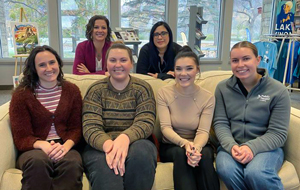
RAC staff celebrated RAC’s fifth anniversary in December along with representatives from the University of North Dakota (UND) and the federal Health Resources and Services Administration (HRSA). Pictured, front: UND President Charles Kupchella, HRSA Administrator Elizabeth Duke, UND Center for Rural Health Director Mary Wakefield, RAC Project Director Kristine Sande. Back (RAC Staff): Maren Niemeier, Kathy Spencer, Naomi Lelm, Holly Gabriel, Marilyn Fundingsland, Mary Reinertson-Sand, Julie Arnold, Susan Rundquist.
In December 2002, the Rural Assistance Center (RAC) launched its fledgling web site and took its first information request by telephone. Five years later, our extensive web site received a facelift to provide better access to the wealth of information that is now available there.
After five years of building the RAC web site, we found that we had outgrown the design of our home page. RAC’s new homepage, launched in December, is designed to help you to take even better advantage of the many resources provided through RAC. The new page allows you to see and immediately access many more of the features and resources available on the site without going through intermediate pages. Also on the page, you will see a new “Featured Resources” section which gives us the opportunity to alert you to important resources that are available to you including new tools, documents and funding opportunities as well as sections of the RAC web site with which you may not be familiar.
If you haven’t already, I would encourage you to visit RAC’s new homepage and make sure that you are taking the best advantage of the resources provided there, as well as through our listservs and customized assistance services. Some of the features of the RAC web site that can be accessed through the redesigned home page include:
Searchable database of over 10,000 resources including news, documents, tools and events
Watching the growth in the usage of the RAC services over the years has been exciting. Since its launch in December 2002, RAC’s web site has received over 1.5 million visits, with over half a million coming in the last year. In addition, RAC has responded to over 4,700 customized assistance requests from people in all 50 states and over 20 foreign countries.
On behalf of the staff of the Rural Assistance Center, I’d like to say that it has truly been a pleasure serving you for the past five years. Everyone on our staff is deeply committed to providing high-quality information to you to assist you in your efforts to maintain and improve services for rural Americans. We look forward to serving you for many years to come.
Reprint Policy: Articles, photos, and charts appearing in the Rural Monitor may be reprinted with the permission of the Rural Assistance Center and proper citation. For permission, please contact ksande@raconline.org.